Absolutely, but with rare exceptions, only where we “tell” it
to. Simply put, concrete is a mixture of sand, cement and
aggregate that is made workable by the addition of water.
As the concrete cures and this water hydrates from the concrete,
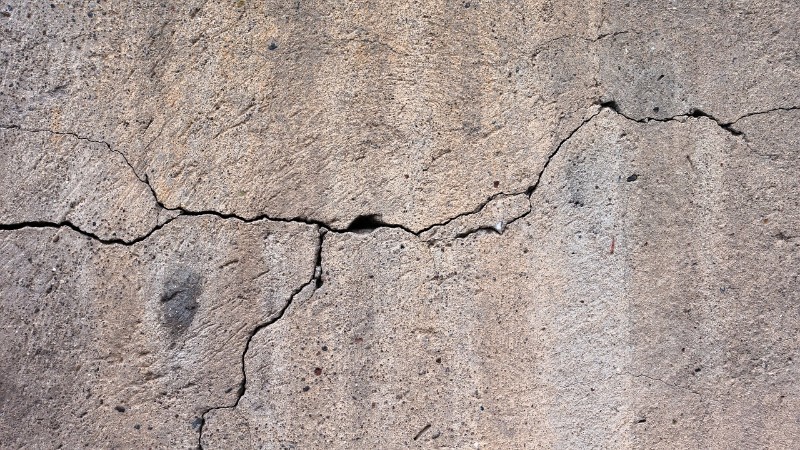
it tends to build up considerable stress. This stress is
relieved by cracking. We tell it where to crack by providing
relatively discreet joints that are saw-cut to specified
depths and other tolerances for joint placement as established
by the American Concrete Institute (ACI). These joints create
a weak plane in the concrete slab that readily relieve these
natural stresses. The actual crack is located at the bottom
of the joint and is not visible.
Top
I’ve heard that the colors just fade
out over time. Is this true?
Although you can lose some surface color in extreme wearing
situations, all of the iron oxide pigments used in these
processes are UV resistant and should not fade. Additionally,
the color hardeners that are used to color the surface create
a finished surface that is substantially harder than normal
concrete and will not wear as quickly. Depending on the coloring
techniques used, the concrete color may change slightly over
the concrete curing period but, if maintained properly, those
colors are there to stay. When the decorative project is
complete, it has been treated with a sealer that protects
the surface from staining and also brings out the richer
colors of the surface. If you notice that the colors are
fading, it’s just an indication that the sealer is
wearing and the light is no longer reflecting the colors
as it once did. A new seal coat, if desired, will bring back
the original rich colors.
Top
I was told that decorative concrete was much cheaper than
real stone. Is that true?
On an average patio (600 square feet), the cost may be 40-60%
less than mortared stone, brick, or pavers. However, every
project has specific issues to consider when determining
job costs – project size, location, accessibility,
existing hardscapes or other obstacles, slope of the terrain,
etc. - and the installation cost can vary accordingly. In
addition to material costs, there are other fixed costs that
must be absorbed by each project based on the amount of time
required to do the job. Considering the duration of travel,
site preparation, pouring, stamping, cleaning and sealing,
the time required to complete a 700 SF walkway is not substantially
different than a project of only 400 SF. Both have the same
built-in fixed costs, but, on a unit price basis, the larger
one distributes it in a much more palatable way. The result?
The smaller project may not, in the short term, be the “cheapest”.
However, when selecting your paving materials short-term
costs are not the only ones to consider.
Top
So why should I use decorative concrete, rather than natural
stone or pavers on my project?
Durability. Properly installed concrete has a design life
of 30-50 years. When you add the myriad products that are
used in decorative concrete – fiber reinforcing, color
hardeners, high-quality sealers, etc. – the surface
is even less prone to wear and deterioration, and, in theory,
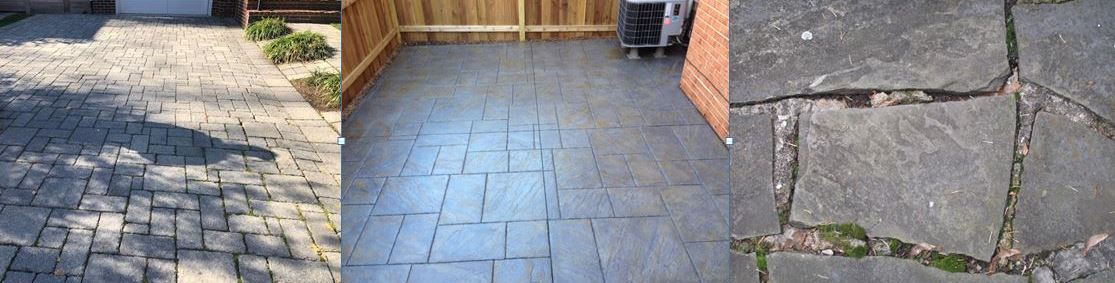
should have a substantially extended life. In natural stone
and mortared brick applications the stones are secured with
mortar. It looks great initially, but mortar can only withstand
the torture of a horizontal exterior application in the range
of 6-8 years, before it needs re-pointing (cleaning out and
installing new mortar). Well done re-pointing can cost up
to half-again as much as the original patio. Paver applications
are prone to heaving in freeze-thaw climates, which may require
annual attention, and they hold on to enough dirt to sustain
grass growth in the warmer months, which may need attention
each time you mow grass. Also, stamped concrete can easily
be formed to contoured designs, which, unlike pavers, brick
and stone, costs nothing extra.
Top
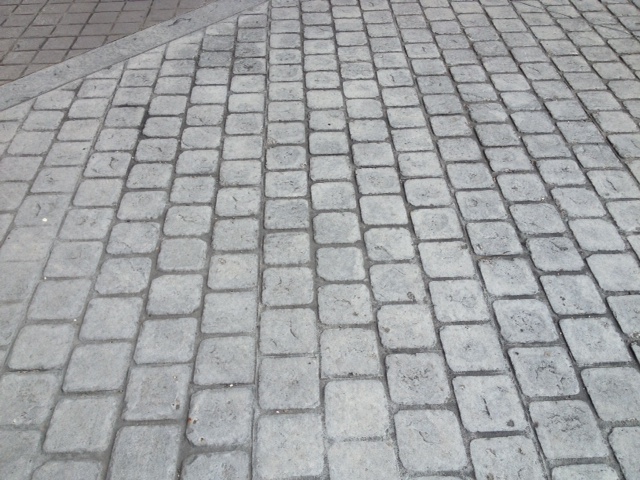
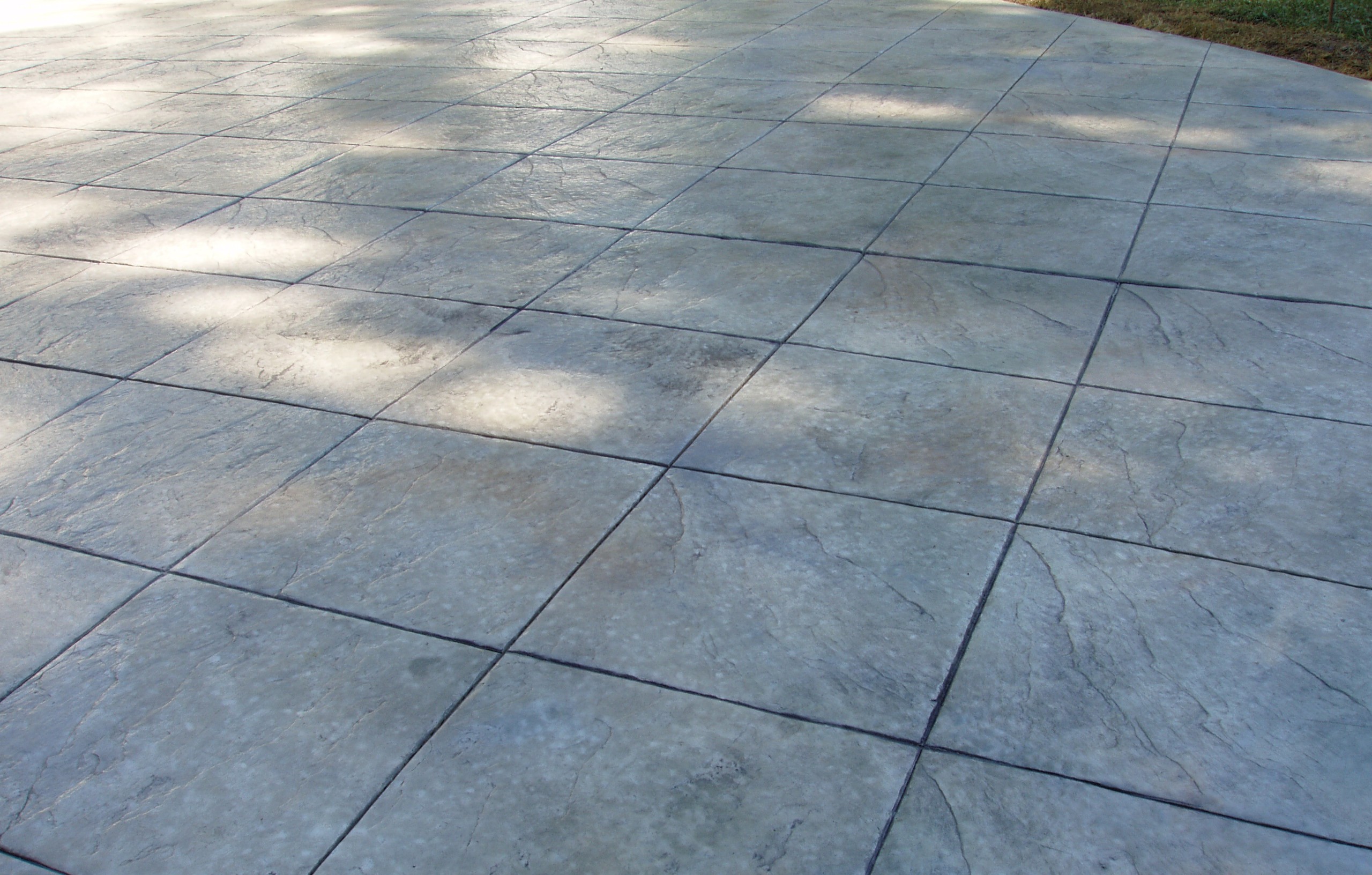
Does it really look like stone or brick?
There are many different processes and pattern styles used
to replicate these natural materials. Some color and pattern
combinations are more effective than others, but the point
in using these materials is not so much to fool someone on
an up-close inspection, but to provide a more durable surface
that is, in the long-term, more cost effective and, most
importantly, aesthetically pleasing.
Top
There are several other companies advertising decorative
concrete. Why should we use your company to do the work?
The decorative concrete business provides extreme challenges
to the most capable concrete contractors - not only in regards
to general concrete knowledge, but in the numerous additional
steps of coloring, staining, finishing, texturing, cleaning
and sealing, and, most importantly, troubleshooting the inevitable
problem. The problems one can experience are virtually unlimited.
Knowing how to avoid common mistakes, and having the ability
and patience to figure out and resolve the others requires
experience and determination. There is no substitute for
the aforementioned qualities in determining who should perform
your work. To this equation, we bring all of the above.
Top
What sort of warranty do you provide?
We provide a one-year warranty against defects in materials
and workmanship.
Top